Expert Real Estate Team: Your Trusted Source for Up-to-Date Real Estate Knowledge

Welcome to the Expert Real Estate Team blog! Whether you're a seasoned realtor, a homeowner looking to sell, or a first-time buyer embarking on your real estate journey, we're here to be your trusted source of valuable information. 

Our blog is packed with insightful articles and expert advice on a wide range of real estate topics. We cover everything from market trends and local insights to navigating the buying and selling process, financing options, and homeownership tips. 

Here's what you can expect:

  • Realtors: Stay ahead of the curve with market updates, marketing strategies, legal and regulatory changes, and expert tips to elevate your real estate career. 
  • Sellers: Get inside knowledge on preparing your home for sale, maximizing your return on investment, and navigating negotiations with confidence. 
  • Buyers: Learn about different mortgage options, discover the secrets to successful homefinding, understand local market dynamics, and make informed decisions. 

Our goal is to empower you with the knowledge and tools you need to achieve your real estate goals. We believe in fostering a community of informed and confident real estate professionals and homeowners. 


Feb. 28, 2020

How Much “Housing Wealth” Can You Build in a Decade?

How Much “Housing Wealth” Can You Build in a Decade? | MyKCM

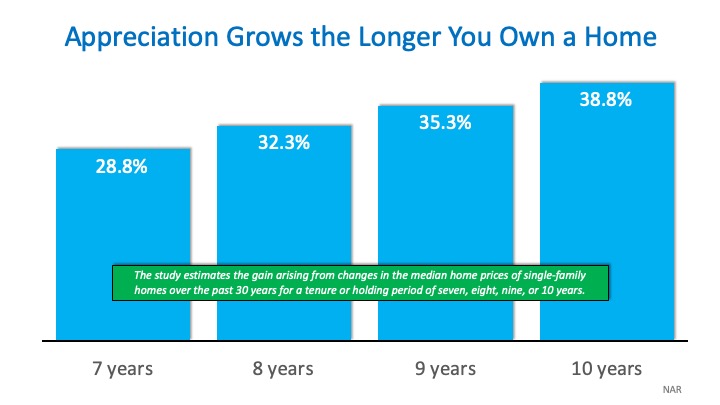
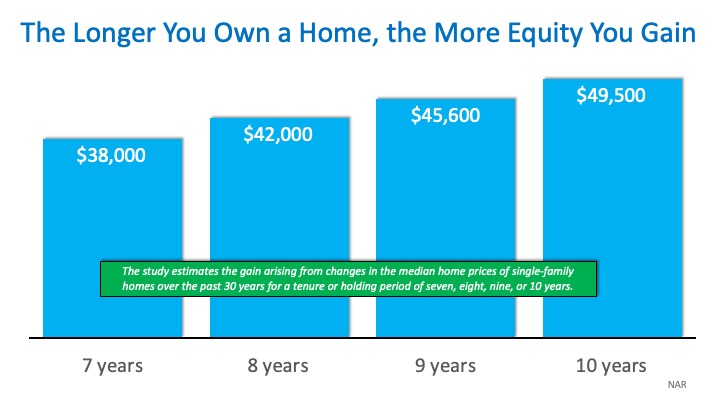
Earlier this month, the National Association of Realtors (NAR) released a special study titled Single-Family Home Price Gains by Years of Tenure. The study estimates median home price appreciation over the last 30 years based on the length of homeownership.

Below are three graphs depicting the most important data revealed in the study.

How much have home prices increased?

One of the first measures of the financial benefits of homeownership is the net worth (in the form of equity) an owner can build over time. The study showed the average increase in home values based on how long homeowners stayed in a home.
How Much “Housing Wealth” Can You Build in a Decade? | MyKCM

What was the percentage of appreciation?

Another way to look at this is by the percentage increase in value over time, called appreciation:How Much “Housing Wealth” Can You Build in a Decade? | MyKCM

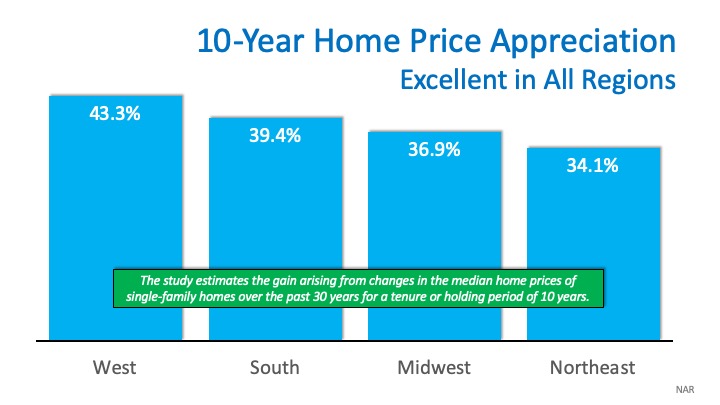
Was this appreciation consistent throughout the country?

Today, when we think of markets that have done well over the last decade, we have a tendency to think about San Francisco, San Diego, Seattle, and other West Coast cities. Though it is true the West Region showed the highest price growth over the last three decades, we can see how every region of the country did quite well in ten-year increments:How Much “Housing Wealth” Can You Build in a Decade? | MyKCMThis data validates the claim that homeownership is great for building wealth. The importance of this information was highlighted in the study’s first sentence:

“Homeownership is an important source of wealth creation, enabling current homeowners and succeeding generations to move up the economic ladder.”

Bottom Line

Homeownership has many financial and non-financial benefits. The accumulation of “housing wealth” through increased equity is a major one. If you’re thinking of buying a home for the first time or moving up to your dream home, the sooner you make the move, the sooner your net worth will begin to grow.to grow.

Feb. 27, 2020

Interest Rates Over Time

Interest Rates Over Time [INFOGRAPHIC] | MyKCM

Feb. 26, 2020

How Trusted Professionals Make Homebuying Easier to Understand

How Trusted Professionals Make Homebuying Easier to Understand | MyKCM

In the spring, many excited buyers get ready to enter the housing market. Others continue dreaming about the homes they’d like to buy. The truth is, many potential buyers continue to dream longer than they need to, simply because they’re confused about the homebuying process. Thankfully, working with a trusted real estate professional can help ease those concerns and make the process to homeownership much easier to understand.

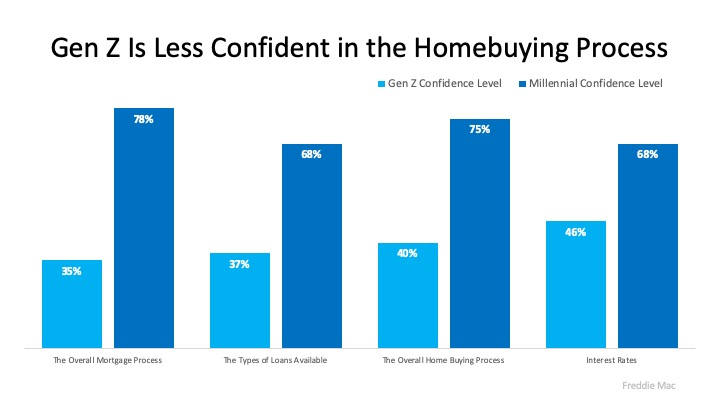
A recent survey conducted by Ipson and Freddie Mac reveals the confidence level of Gen Z and Millennial buyers regarding the homebuying process. The graph below shows the breakdown of the top results, clearly indicating there’s a significant portion of younger buyers who are not yet confident with some of the steps in the homebuying process.How Trusted Professionals Make Homebuying Easier to Understand | MyKCMBetween the homebuying process and the mortgage process, there are 230 possible steps in the transaction. With trusted professionals on your side, you certainly don’t have to know them all to have a successful experience.

There are many reasons why these steps can change as you move through each one. Depending on your personal circumstances, the term or your mortgage, and the type of loan you use, the path you take may need to vary. That’s why guidance and support from the experts is key.

In addition to the process itself, respondents in the survey definitely expressed concerns about understanding the types of loans available. Here are just a few of the basic loans to consider. Be sure to speak with your lender about the specifics of what will work best for you:

  • FHA: Loans guaranteed by the Federal Housing Administration for first-time buyers. They generally enable qualified borrowers to enter the housing market with a lower down payment.
  • Conventional: Loans that usually require a larger down payment. Repeat buyers usually use these types of loans since they have an established credit history as well as more money from the sale of their previous home (called equity) for a bigger down payment.
  • VA: Loans available for Veterans of the U.S. Armed Forces and their spouses. They are guaranteed by the Department of Veteran Affairs.
  • USDA: Loans for those living in rural and suburban areas. A qualified lender can issue a USDA home loan, and they are guaranteed by the United States Department of Agriculture (USDA).

Interest rates also popped up as a common area of confusion among Gen Z and Millennial respondents in the survey. With today’s rates hovering at near historic lows, it’s a fantastic time for buyers to get more house for their money in the current market. Why? When mortgage rates are this low and wages are increasing as they are today, overall affordability increases, enabling home buyers to stretch their mortgage dollars further. It’s just another area where a trusted professional can help simplify the process and give guidance along the way.

Bottom Line

There are many possible steps in a real estate transaction, but they don’t have to be confusing. To understand your best course of action, let’s get together today to ensure you have a trusted advisor who will help you feel confident and informed at every turn.

Feb. 25, 2020

The Many Benefits of Aging in a Community

The Many Benefits of Aging in a Community | MyKCM

There’s comfort in being around people who share common interests, goals, and challenges. That comfort in a community doesn’t wane with age – it actually deepens. Whether it’s proudly talking about grandchildren or lamenting the fact that our eyes aren’t as good as they used to be, it helps to be around people who not only understand what we’re saying but actually feel the same joys and concerns as well.

That’s why many boomers are deciding to move into an active adult community. In the latest 55places National Housing Survey, they were described by one out of three seniors as an “outgoing, social community of likeminded people.”

Bill Ness, Chief Executive Officer and Founder of 55places.com, explains:

“Baby boomers are now reaching the age when moving to an active adult community is the ideal opportunity for them…Many boomers now want to downsize, experience a maintenance-free lifestyle, and pursue more social opportunities. It’s exciting that there are so many choices for baby boomers.”

There’s still a desire, however, among many seniors to “age-in-place.” According to the Senior Resource Guide, aging-in-place means:

“…that you will be remaining in your own home for the later years of your life; not moving into a smaller home, assisted living, or a retirement community etcetera.”

The challenge is, many seniors live in suburban or rural areas, and that often necessitates driving significant distances to see friends or attend other social engagements. A recent report from the Joint Center for Housing Studies of Harvard University (JCHS) titled Housing America’s Older Adultsaddressed this exact concern:

“The growing concentration of older households in outlying communities presents major challenges for residents and service providers alike. Single-family homes make up most of the housing stock in low-density areas, and residents typically need to be able to drive to do errands, see doctors, and socialize.”

The Kiplinger report also chimed in on this subject:

“While most seniors say they want to age in place, a much smaller percentage of them actually manage to accomplish it, studies show. Transportation is often a problem; when you can no longer drive, you can’t get to medical appointments or to other outings.”

Driving may not be a challenge right now, but think about what it may be like to drive 10, 20, or 30 years down the road.

There are also health challenges brought on by a possible lack of socialization when living at home versus a community of seniors. Sarah J. Stevenson is an author who writes about seniors. In a recent blog post for A Place for Mom, she explains:

“Social contacts tend to decrease as we age for reasons such as retirement, the death of friends and family, or lack of mobility.”

Thankfully, research from the same article suggests if you’re spending time with others in a community, thus reducing the impact of loneliness and isolation, there’s less of a risk of developing high blood pressure, obesity, heart disease, a weakened immune system, depression, anxiety, cognitive decline, Alzheimer’s disease, and early death.

Though the familiarity of our current home may bring a feeling of warmth, comfort, and convenience, it’s important to understand that staying there may mean missing out on crucial socialization opportunities. Living with adult children, joining a retirement community, or moving to an assisted living facility can help us continue to be with people we enjoy every day.

Bottom Line

“Aging-in-place” definitely has its advantages, but it could mean getting “stuck-in-place” too. There are many health benefits derived from socialization with a community of people that shares common interests. It’s important to take the need for human interaction into consideration when making a decision about where to spend the later years in life.

Posted in Senior Real Estate
Jan. 13, 2020

2020 Homebuying Checklist

2020 Homebuying Checklist | MyKCM

Some Highlights:

  • If you’re thinking of buying a home, plan ahead and stay on the right track, starting with pre-approval.
  • Being proactive about the homebuying process will help set you up for success in each step.
  • Make sure to work with a trusted real estate professional along the way, to help guide you through the homebuying steps specific to your area.
Posted in Buying
Jan. 8, 2020

First-Time Buyers Are Searching for Existing Homes This Year

First-Time Buyers Are Searching for Existing Homes This Year | MyKCM

In the latest Housing Trends Report, the National Association of Home Builders (NAHB) measured the share of adults planning to buy a home over the next 12 months. The report indicates the percentage of all buyers that will be first-time buyers looking to purchase a home grew from 58% in Q4 2018 to 63% in Q4 2019.

The results revealed,

“Millennials are the most likely generation to be making plans to purchase a home within a year (19%), followed by Gen Z (13%) and Gen X (12%)…Prospective buyers in the youngest two generations are primarily first-time buyers:  88% of Gen Z buyers and 78% of Millennial buyers are reaching out to homeownership for the first time in their lives.”

With a high demand from first-time homebuyers and a shortage of inventory in the current market, selling your existing home this year might be your best move. Why? Because when homebuyers begin their search, they’re not all looking for new construction. Many are eager to find a little charm and character in a place to call home – possibly yours.

In fact, according to the same study, there is a significant demand for existing homes:

“In terms of the type of home these prospective home buyers are interested in, 40% are looking to buy an existing home and 19% a newly-built home. The remaining 41% would buy either a new or existing home.”

With showing activity up among buyers and more new construction coming to market, as a homeowner, you have the opportunity to sell your existing house now and move up into a new one, or downsize into a home that better fits your current and ever-changing needs.

Bottom Line

Not all buyers are looking for a newly built house. If you’re ready to take advantage of low mortgage rates and a high demand for your existing home, let’s get together to determine how we will market the charming details of your current house to potential buyers.

Nov. 26, 2019

Buyer Demand Growing in Every Region

Buyer Demand Growing in Every Region | MyKCM

Buyers are out in full force this fall, increasing the demand for homebuying in all four regions of the country.

According to the latest ShowingTime Showing Index,

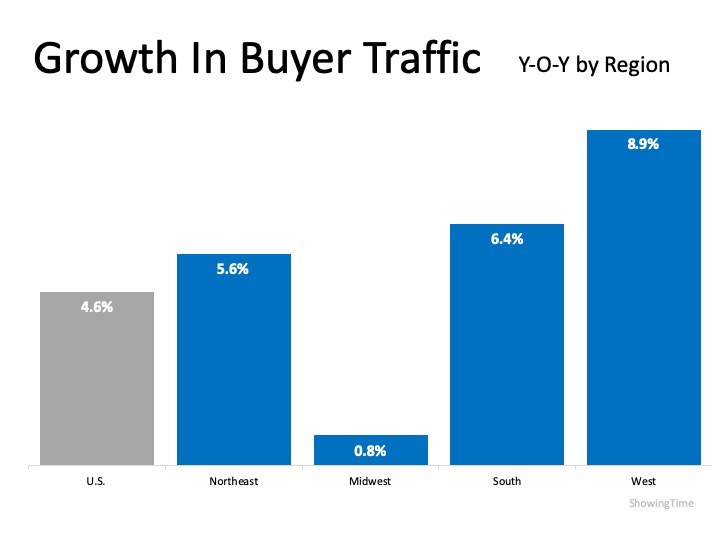
“Home showing activity was up again nationwide with a 4.6 percent rise in traffic, as the traditionally slow fall season began with a marked boost in buyer interest.”

Buyers clearly have the right idea, as mortgage rates have dropped over a full percentage point since the fall of 2018. They’ve hovered in a historically low range since this summer, making the overall cost of homeownership significantly more attractive and affordable.

Here’s the breakdown of how ShowingTime reports current buyer traffic patterns across the country:

“The West Region, which until August had experienced 18 consecutive months of flagging home buyer traffic, lead the four regions in year-over-year improvement with an 8.9 percent increase in buyer activity.

The South followed with a 6.4 percent increase, the largest such improvement in the region since April 2018, with the Northeast Region’s 5.6 percent increase the next largest among the four regions.

The Midwest’s more modest 0.8 percent year-over-year growth rounded out the nation’s promising month.”

Buyer Demand Growing in Every Region | MyKCMWith ShowingTime reporting “nationwide growth for the second consecutive month, a first since December 2017 – January 2018”, it’s one more reason why selling your house this winter is the way to go. List while buyers are on the market, before competition with other sellers pops up in your neighborhood.

Bottom Line

If you’re thinking of waiting until spring to sell, think again! Let’s get together to discuss listing your house now while buyer traffic is actively surging throughout the country.

Nov. 25, 2019

7 Reasons to List Your House This Holiday Season

Around this time each year, many homeowners decide to wait until after the holidays to list their houses. Similarly, others who already have their homes on the market remove their listings until the spring. Let’s unpack the top reasons why listing your house now or keeping it on the market this winter may be the best choice you can make.

Here are seven great reasons not to wait:

  1. Relocation buyers are out there now. Many companies are still hiring throughout the holidays, and they need their new employees to start as soon as possible.
  2. Purchasers who are looking for homes during the holidays are serious buyers and are ready to buy now.
  3. You can restrict the showings on your home to days and times that are most convenient for you. You will remain in control.
  4. Homes show better when decorated for the holidays.
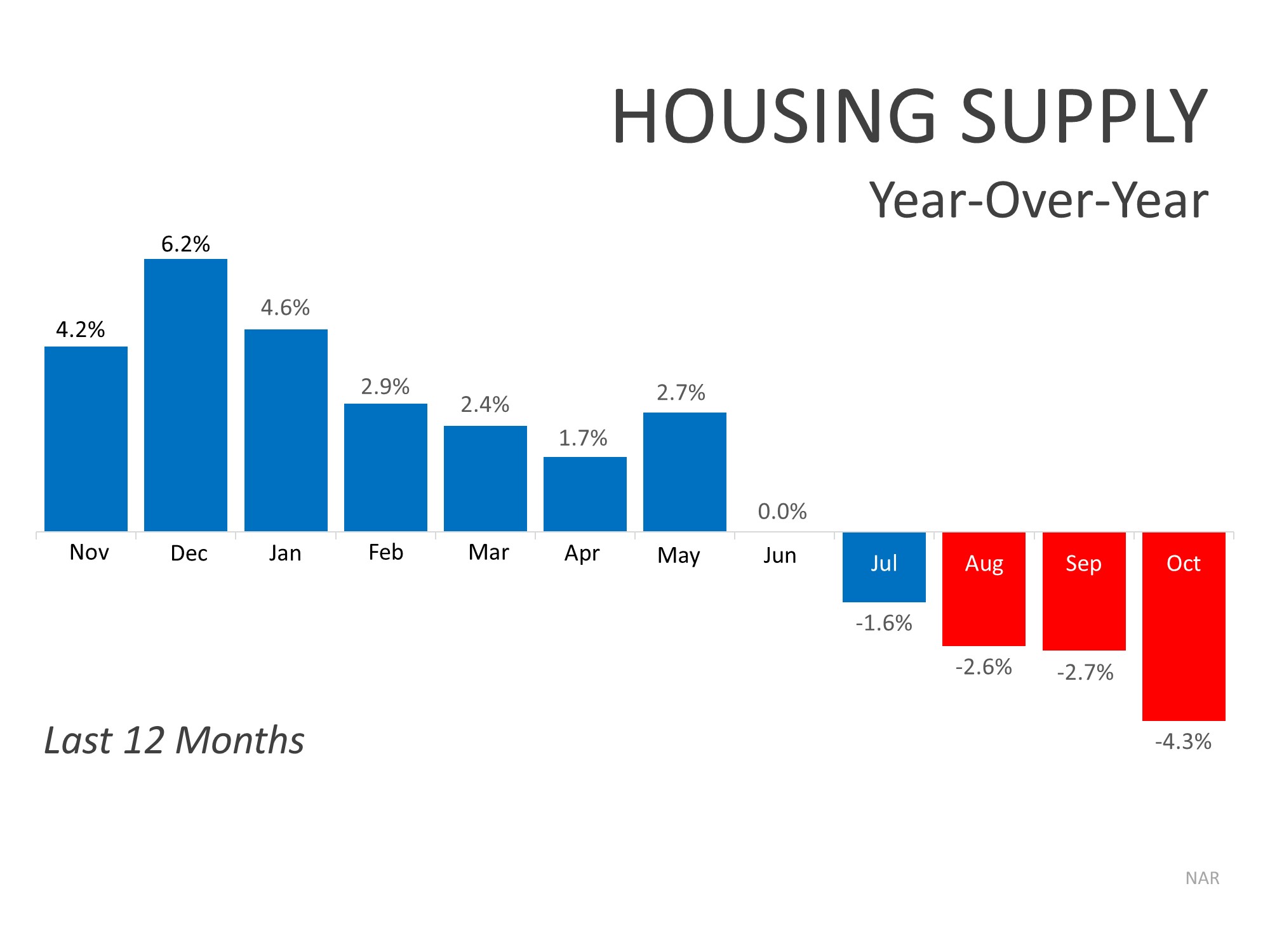
  5. There is minimal competition for you as a seller right now. Over the past few months we’ve seen the supply of homes for sale decreasing year-over-year, as shown in the graph below:7 Reasons to List Your House This Holiday Season | MyKCM
  6. The desire to own a home doesn’t stop during the holidays. Buyers who were unable to find their dream homes during the busy spring and summer months are still searching, and your home may be the answer.
  7. Late fall and early winter make up the “sweet spot” for sellers. The supply of listings increases substantially after the holidays. Also, in many parts of the country, new construction will continue to surge and reach new heights in 2020, which will lessen the demand for your house next year.

Bottom Line

It may make the most sense to list your home this holiday season. Let’s get together to determine if selling now is your best move.

Sept. 30, 2019

How Does the Supply of Homes for Sale Impact Buyer Demand?

How Does the Supply of Homes for Sale Impact Buyer Demand?

The price of any item is determined by supply, as well as the market’s demand for the item. The National Association of REALTORS (NAR) surveys “over 50,000 real estate practitioners about their expectations for home sales, prices and market conditions” for their monthly REALTORS Confidence Index.

Their latest edition sheds some light on the relationship between seller traffic (supply) and buyer traffic (demand).

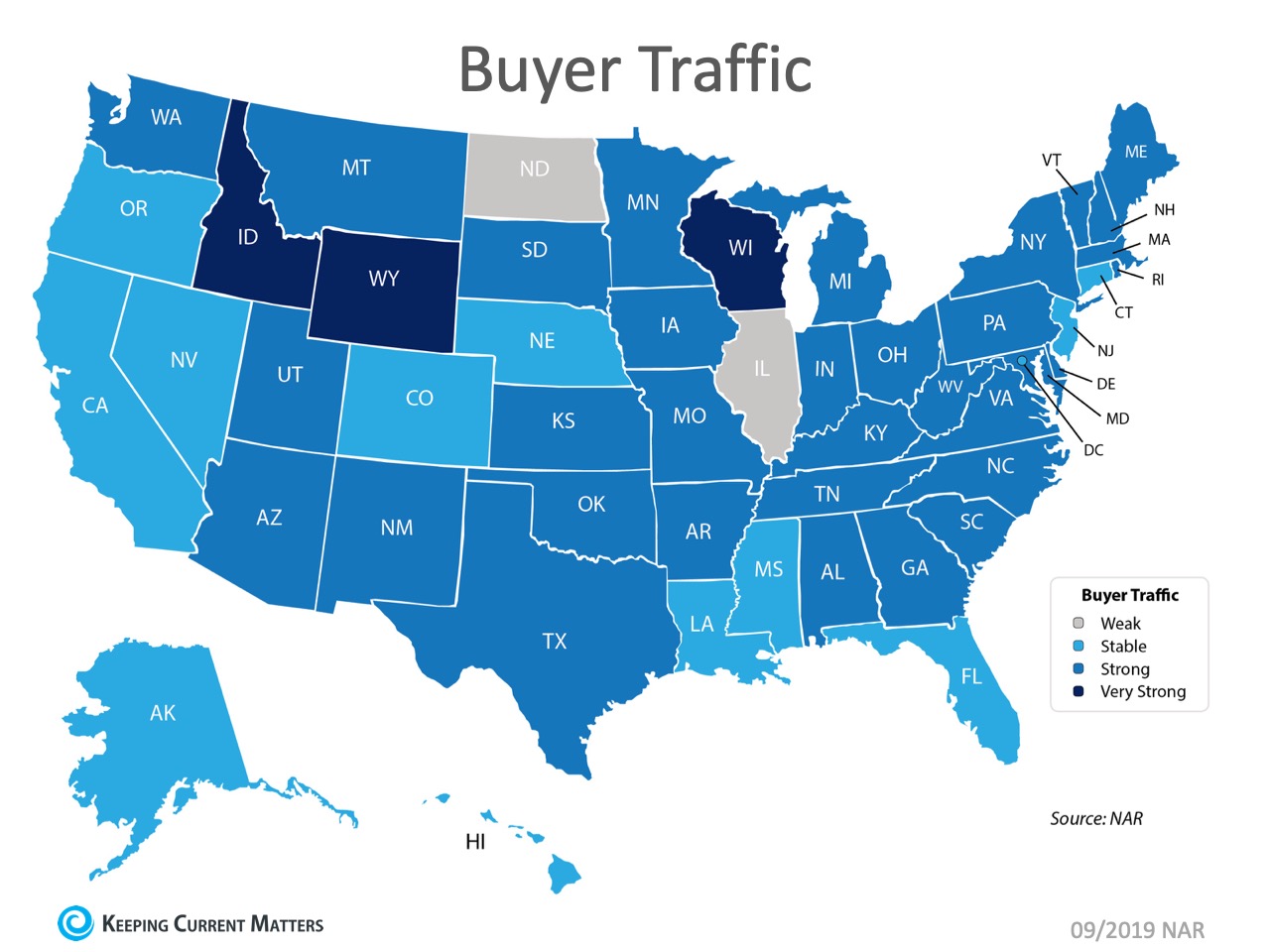
Buyer Demand

The map below was created after asking the question: “How would you rate buyer traffic in your area?”How Does the Supply of Homes for Sale Impact Buyer Demand? | Keeping Current MattersThe darker the blue, the stronger the demand for homes is in that area. The survey shows that in 3 of the 50 U.S. states, buyer demand is now very strong; only 2 of the 50 states have a ‘weak’ demand. Overall, buyer demand is slightly lower than this time last year but remains strong.

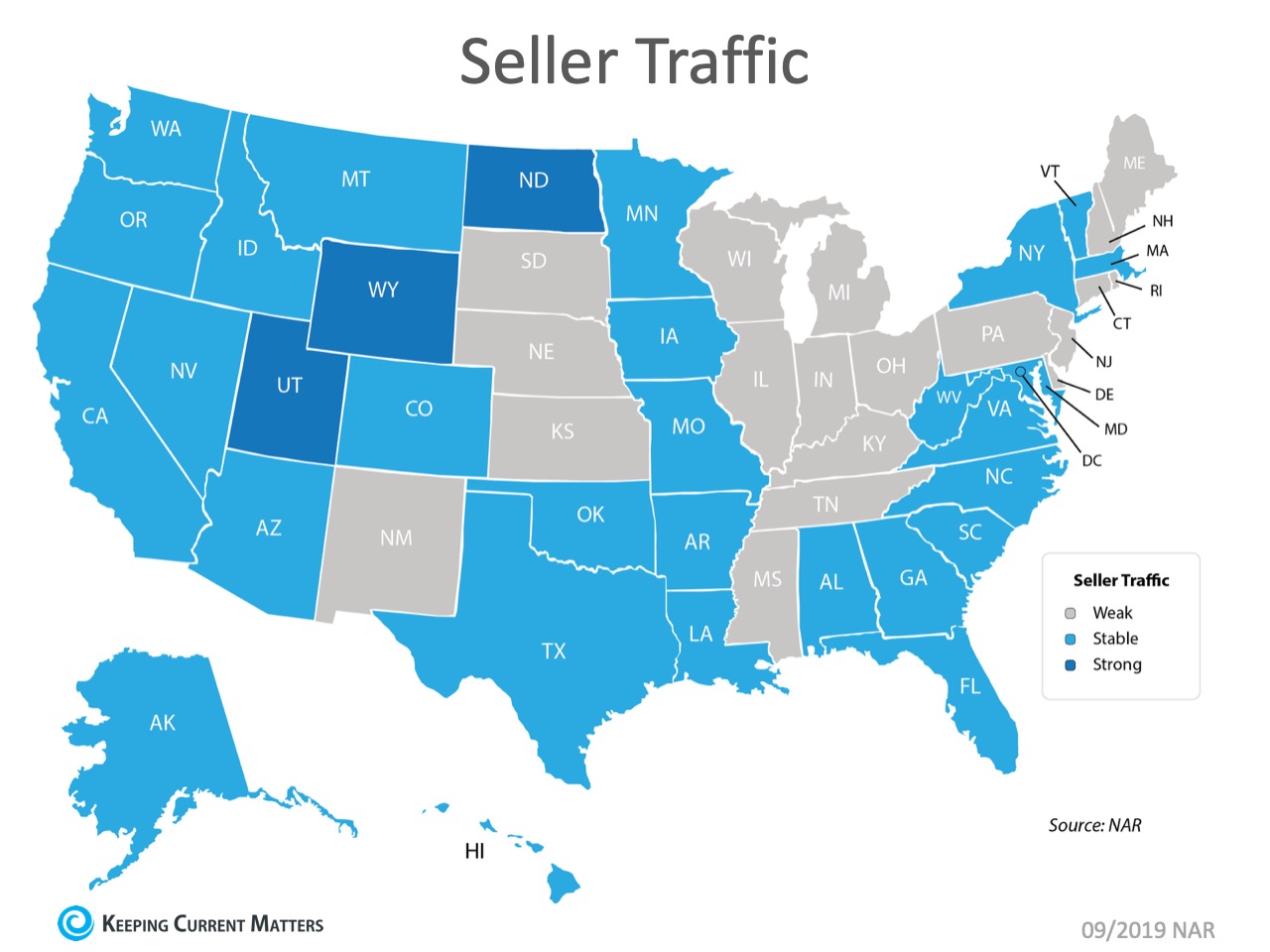
Seller Supply 

The index also asked: “How would you rate seller traffic in your area?”How Does the Supply of Homes for Sale Impact Buyer Demand? | Keeping Current MattersAs the map below shows, 18 states reported ‘weak’ seller traffic, 29 states and Washington, D.C. reported ‘stable’ seller traffic, and 3 states reported ‘strong’ seller traffic. This means there are far fewer homes on the market than what is needed to satisfy the buyers who are looking for homes.

Aug. 23, 2019

Housing Supply Not Keeping Up With Population Increase

Housing Supply Not Keeping Up with Population Increase

Many buyers are wondering where to find houses for sale in today’s market. It’s a true dilemma. We see an increase in buyer demand, but the supply available for purchase isn’t keeping up.

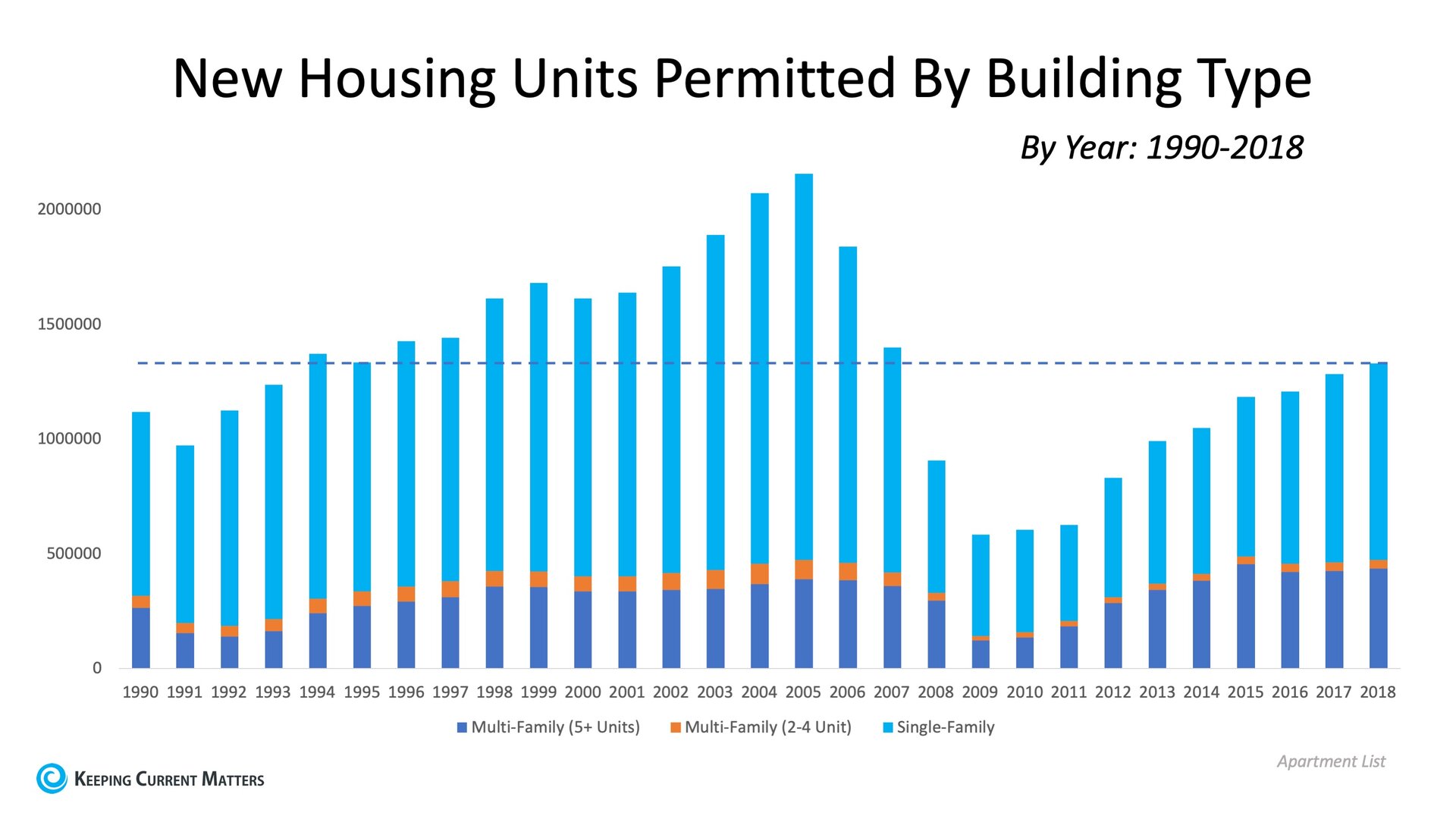
The number of new housing permits issued prior to the great recession increased for 15 years until 2005 (from 1.12 million in 1990 to a pre-recession peak of 2.16 million in 2005). According to Apartment List,

From 1990 to 2005, the number of single-family permits issued more than doubled, while the number of multi-family permits grew by 49 percent.

When the housing market crashed, the number of new homes permitted decreased to its lowest level in 2009 (see below):Housing Supply Not Keeping Up with Population Increase | Keeping Current MattersSince then, supply and demand have been out of balance when it comes to new construction. According to the same report,

Construction of single-family homes has recovered much more slowly — the number of single-family housing units permitted in 2018 was barely half the number permitted in 2005.”

Why is new construction so important?

As the U.S. population increases, there is also an increase in the need for new homes. Today, new construction is not keeping up with the increase in the nation’s population. The report continues:

“The total number of residential housing units permitted in 2018 was roughly the same as the number permitted in 1994, when the country’s population was 20 percent less than it is today.”

Essentially, the dip in home building coupled with the steadily increasing U.S. population means there is now a selling opportunity for homeowners willing to list their current houses.

Bottom Line

If you’re considering selling your house to move up, now is a great time to get a positive return on your investment in a market with high demand. Contact a local real estate professional who can walk you through the specific options available for you and your family.