Expert Real Estate Team: Your Trusted Source for Up-to-Date Real Estate Knowledge

Welcome to the Expert Real Estate Team blog! Whether you're a seasoned realtor, a homeowner looking to sell, or a first-time buyer embarking on your real estate journey, we're here to be your trusted source of valuable information. 

Our blog is packed with insightful articles and expert advice on a wide range of real estate topics. We cover everything from market trends and local insights to navigating the buying and selling process, financing options, and homeownership tips. 

Here's what you can expect:

  • Realtors: Stay ahead of the curve with market updates, marketing strategies, legal and regulatory changes, and expert tips to elevate your real estate career. 
  • Sellers: Get inside knowledge on preparing your home for sale, maximizing your return on investment, and navigating negotiations with confidence. 
  • Buyers: Learn about different mortgage options, discover the secrets to successful homefinding, understand local market dynamics, and make informed decisions. 

Our goal is to empower you with the knowledge and tools you need to achieve your real estate goals. We believe in fostering a community of informed and confident real estate professionals and homeowners. 


June 11, 2019

The Feeling You Get from Owning Your Home

The Feeling You Get from Owning Your Home

The Feeling You Get from Owning Your Home | MyKCM

We often talk about the financial reasons why buying a home makes sense. But, more often than not, the emotional reasons are the more powerful and compelling ones.

No matter what shape or size your living space is, the concept and feeling of home can mean different things to different people. Whether it’s a certain scent or a favorite chair, that feeling of safety and security you gain from owning your own home is simultaneously one of the greatest and most difficult to describe.

Frederick Peters, a contributor for Forbesrecently wrote about that feeling, and the pride that comes from owning your own home.

“As homeowners discover, living in an owned home feels different from living in a rented home. It’s not just that an owner can personalize the space; it touches a chord even more fundamental than that.

Homeownership enhances the longing for self-determination at the heart of the American Dream. First-time homeowners, young or old, radiate not only pride but also a sense of arrival, a sense of being where they belong. It cannot be duplicated by owning a 99-year lease.”

Bottom Line

Owning a home brings a sense of accomplishment and confidence that cannot be achieved through renting. If you are debating renewing your lease, let’s get together before you do to answer any questions you may have about what your next steps should be, and what is required in today’s market!

Posted in Buying
June 7, 2019

How Homeownership Delivers Unsurpassed Family Wealth

How Homeownership Delivers Unsurpassed Family Wealth

There are many financial benefits to homeownership, but probably none more important than its ability to create family wealth.

How Housing Matters is a joint project of the Urban Land Institute and the MacArthur Foundation. It is an online resource for research and information on how homeownership contributes to individual and community success.

Their article, The First Rung on the Ladder to Economic Opportunity Is Housing, explains the importance of homeownership to a family’s financial health. In that article, they simply stated:

“The ladder to economic success can stretch only so high without the asset-building power of homeownership.”

To this point, National Association of Realtors’ (NAR) Economists’ Outlook Blog revealed in a recent post:

“Housing wealth contributes positively to the homeowner’s and children’s economic condition, because home equity can be tapped for expenditures such as investing in another property (which can generate rental income), home renovation (which further increases the home value), a child’s college education, emergency or major life events, or expenses in retirement…

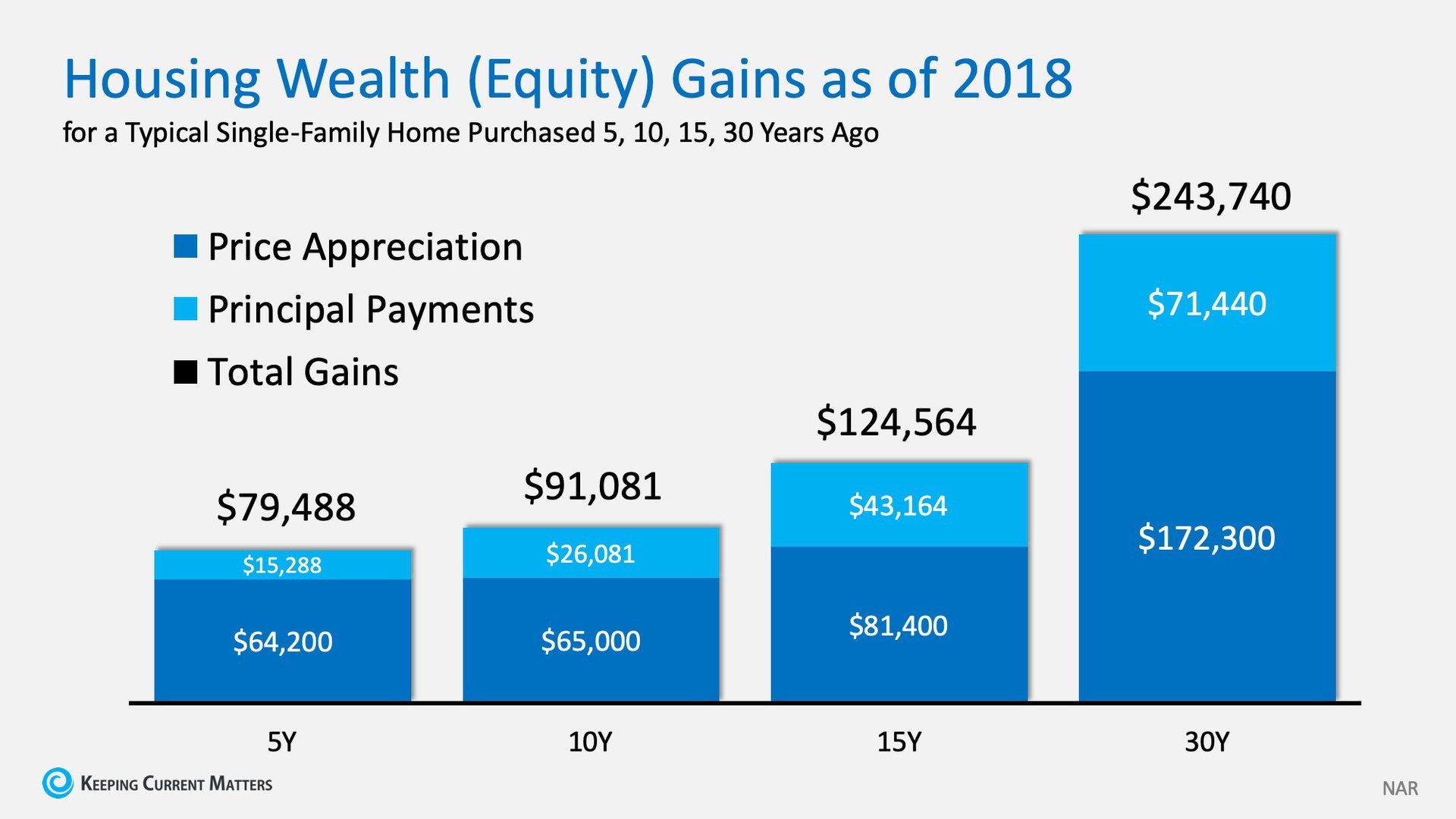
Housing wealth (or net worth or equity) is built up over time via the home price appreciation and the principal payments that the homeowner makes on the loan.”

Here is a graph showing the build-up of wealth over time:How Homeownership Delivers Unsurpassed Family Wealth | Keeping Current Matters

Just last month, NAR’s Chief Economist, Lawrence Yun, explained that even though home appreciation has slowed, homeowners are still building wealth:

“Homeowners in the majority of markets are continuing to enjoy price gains, albeit at a slower rate of growth. A typical homeowner accumulated $9,500 in wealth over the past year.”

Later in life, this wealth is crucial…

This wealth is important to a family’s retirement plans. In a recent report from the Joint Center for Housing Studies at Harvard University titled, Housing America’s Older Adults 2018, they revealed that a renter 65 years old or older has a net worth of $6,710. Meanwhile, a homeowner 65+ years old has a net worth of $319,200. That huge difference will allow for a dramatic upgrade in one’s lifestyle during your retirement years.

Bottom Line

Homeownership builds wealth. This, in turn, allows families to have more and better options when it comes to their children and their life in retirement.

June 6, 2019

What Is Important To Boomers When Selling Their House?

What is Important to Boomers when Selling their House?

If you are a “baby boomer” (born between 1946 and 1964), you may be thinking about selling your current home. Your children may have finally moved out. Your large, four-bedroom house with three bathrooms no longer fits the bill. Taxes are too high. Utilities are too expensive. Cleaning and repair are too difficult. You may be ready to move into a home that better fits your current lifestyle. Many fellow boomers have already made the move you may be considering.

The National Association of Realtors recently released their 2019 Home Buyer and Seller Generational Report. The report revealed many interesting tidbits about both categories of baby boomers: younger boomers (ages 54 to 63) and older boomers (64 to72). Here are a few of the more interesting topics.

Percentage of Buyers who Looked Online First

  • All Buyers: 44%
  • Younger Boomers: 46%
  • Older Boomers: 44%

Where Boomers Found the Home They Purchased

The two major ways buyers found the home they purchased:

  • All buyers: 50% on the internet, 28% through a real estate agent
  • Younger Boomers: 46% on the internet, 33% through a real estate agent
  • Older Boomers: 36% on the internet, 35% through a real estate agent

Distance Seller Moved

The distance between the home they purchased and the home they recently sold was much greater for boomers than the average seller.

  • All sellers: 20 miles
  • Younger Boomers: 27 miles
  • Older Boomers: 50 miles

Tenure in Previous Home of Seller

The percentage of older boomers who lived in their previous home for more than 20 years was almost twice the amount of the average seller.

  • All sellers: 16%
  • Younger Boomers: 20%
  • Older Boomers: 31%

Primary Reason to Sell their Previous Home

  • Want to move closer to friends or family
  • Home too large
  • Retirement

View of Homeownership as a Financial Investment

  • 83% of Younger Boomers see homeownership as a good investment
  • 82% of Older Boomers see homeownership as a good investment

Bottom Line

If you are a boomer and thinking about selling, now is the time to contact Leanne Carswell to help determine your options.

Leanne holds the Senior Real Estate Specialist® (SRES)® designation. This means she is qualified to help seniors and their families with real estate transactions and other resources seniors may need during all the stages of selling their home.


June 4, 2019

Multigenerational Homes Are On The Rise

As loved ones start to get older, we start to wonder: how long will they be able to live alone?  Will they need someone there to help them with daily life? There’s a reason to ask those questions now more than ever, as the average life expectancy in the U.S. is 78 years old!  As a result, 41% of Americans in the market are searching for a home that can accommodate a multigenerational family.

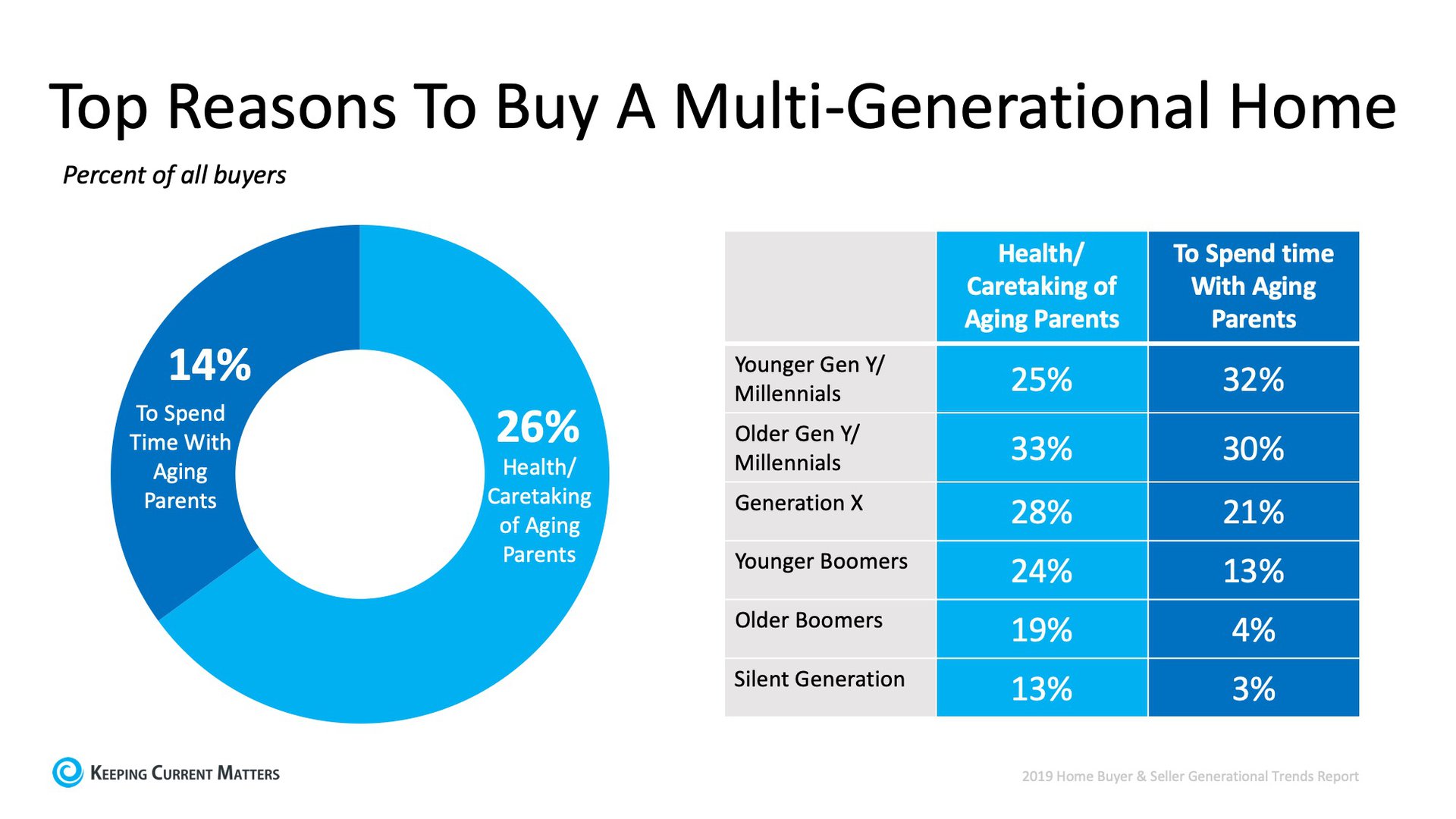
The graph below shows the number of people by generation that purchased a multigenerational home because they will either be taking care of an aging parent or they just want to spend time together.Multigenerational Homes Are on the Rise | Keeping Current Matters

Of those buyers, 26% indicated they will be taking care of an aging parent, and 14% said they want to spend time with an aging parent. These numbers do not come as a surprise. According to Pew Research Center, 64 million Americans (20% of the population) lived in a multigenerational household in 2016 (Last numbers available).Multigenerational Homes Are on the Rise | Keeping Current MattersAn increasing number of studies affirm the benefits of being part of a multigenerational household. These benefits aren’t just for the grandchildren, but for the grandparents as well. According to these two resources:

The University of Oxford

“Children who are close to their grandparents have fewer emotional and behavioral problems and are better able to cope with traumatic life events, like a divorce or bullying at school”.

Boston College

“Researchers found that emotionally close ties between grandparents and adult grandchildren reduced depressive symptoms in both groups”.

This research gives helpful insight into why 41% of Americans are in the market to buy a multigenerational home.

Bottom Line

If you have a home that could accommodate a multigenerational family and are thinking about selling, now is the perfect time to put it on the market! The number of buyers looking for this type of home will only continue to increase.

June 4, 2019

2 Things You Need To Know To Properly Price Your Home

In today’s housing market, home prices are increasing at a slower pace (3.7%) than they have over the last eight years (6-7%). However, they are still are above historical norms. Low supply of listed homes and high demand from buyers has pushed prices to rise rapidly.

In the mind of the homeowner, annual home price appreciation over 6% has become the new normal. This becomes a challenge when a homeowner looks to refinance or sell their home, as the expectation of what the homeowner believes the home should be worth does not always line up with the bank’s appraisal.

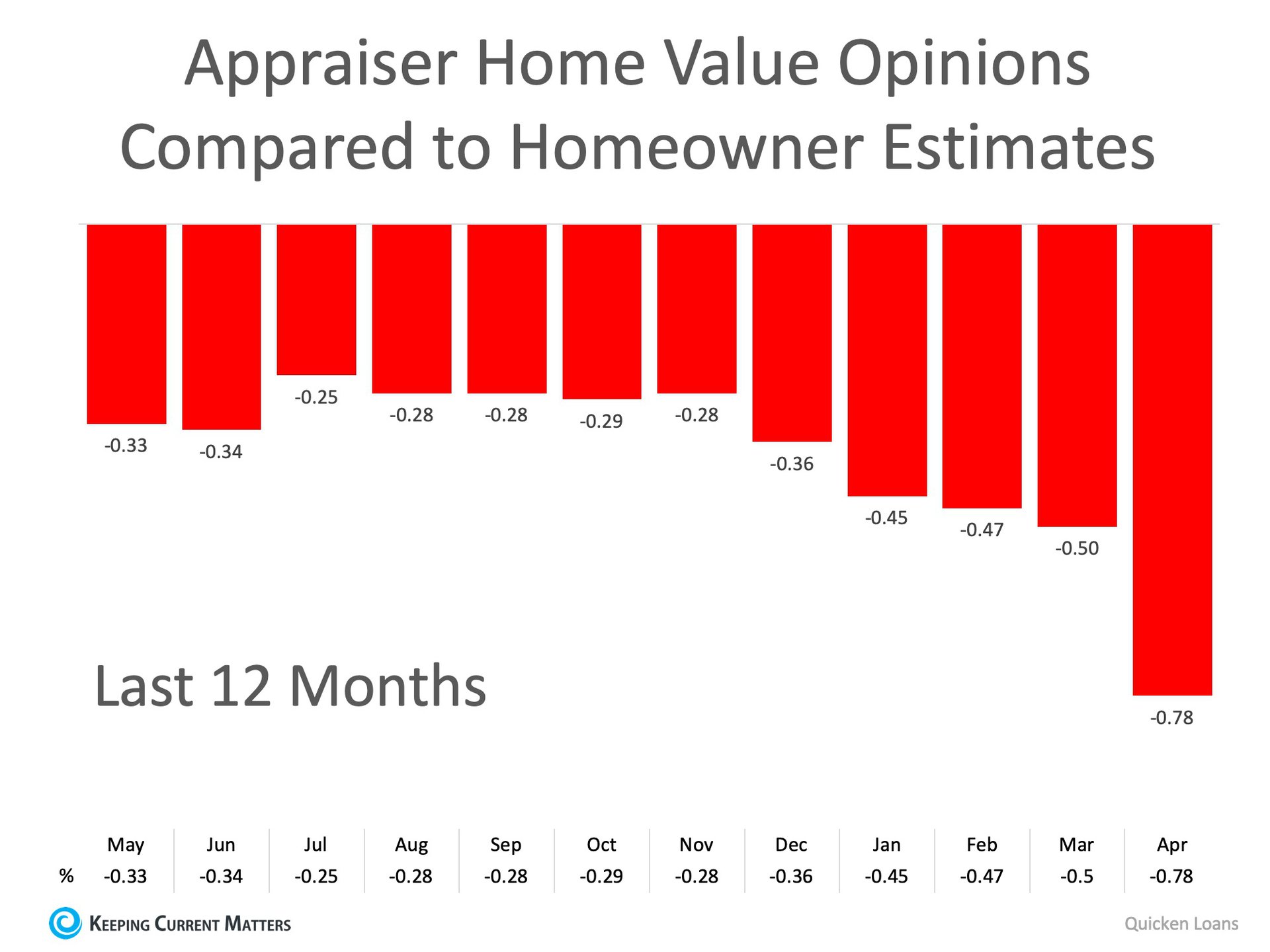
Every month, the Home Price Perception Index (HPPI) measures the disparity between what a homeowner seeking to refinance their home believes their house is worth and what an appraiser’s evaluation of that same home is.

Over the last five months, the gap between the homeowner’s opinion and the bank’s appraisal has widened to -0.78%. This is important for homeowners to note, as even a 0.78% difference in appraisal can mean thousands of dollars that a buyer or seller would have to come up with at closing (depending on the price of the home).

The chart below illustrates the changes in home price estimates over the last 12 months.

2 Things You Need to Know to Properly Price Your Home | Keeping Current Matters

While the appraisal gap widens, another trend is also becoming more common.

According to realtor.com“the share of homes which had their prices cut increased by 2% compared to last year”. Thirty-seven out of the 50 largest US housing markets saw an increase in overall price reductions.

In today’s market, you need an expert agent who can help price your house right from the start. Homeowners who make the mistake of overpricing their homes will eventually have to drop the price. This leaves buyers wondering if the price drop was caused by something wrong with the house. In reality, nothing is wrong- the price was just too high!

Bottom Line

If you are planning on selling your house in today’s market, meet with a local real estate professional who can help you set your listing price properly from the start!

June 3, 2019

The Ultimate Truth About Housing Affordability

There have been many headlines decrying an “affordability crisis” in the residential real estate market. While it is true that buying a home is less affordable than it had been over the last ten years, we need to understand why and what that means.

On a monthly basis, the National Association of Realtors (NAR), produces a Housing Affordability Index. According to NAR, the index…

“…measures whether or not a typical family earns enough income to qualify for a mortgage loan on a typical home at the national and regional levels based on the most recent price and income data.”

Their methodology states:

“To interpret the indices, a value of 100 means that a family with the median income has exactly enough income to qualify for a mortgage on a median-priced home. An index above 100 signifies that family earning the median income has more than enough income to qualify for a mortgage loan on a median-priced home, assuming a 20 percent down payment.”

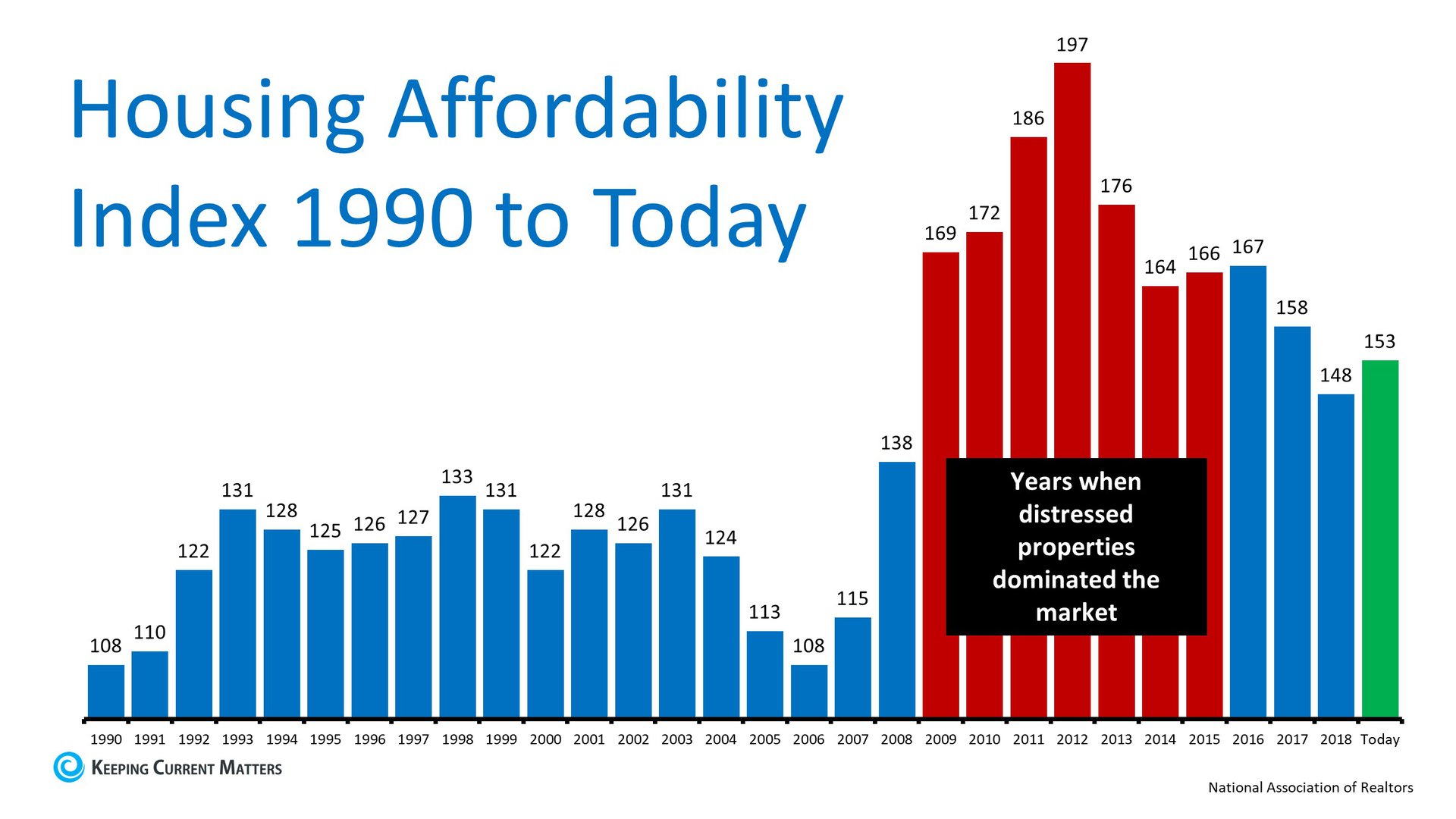
So, the higher the index, the more affordable it is to purchase a home. Here is a graph of the index going back to 1990:

The Ultimate Truth about Housing Affordability | Keeping Current Matters

It is true that the index is lower today than any year from 2009 to 2017. However, we must realize the main reason homes were more affordable. That period of time immediately followed a housing crash and there were large numbers of distressed properties (foreclosures and short sales). Those properties were sold at large discounts.

Today, the index is higher than any year from 1990 to 2008. Based on historic home affordability data, that means homes are more affordable right now than any other time besides the time following the housing crisis.

With mortgage rates remaining low and wages finally increasing, we can see that it is MORE AFFORDABLE to purchase a home today than it was last year!

Bottom Line

With wages increasing, price appreciation moderating, and mortgage rates remaining near all-time lows, purchasing a home is a great move based on historic affordability numbers.

June 3, 2019

The Top Reasons to Own Your Home

The Top Reasons to Own Your Home [INFOGRAPHIC] | Keeping Current Matters

Some Highlights:

  • June is National Homeownership Month!
  • Now is a great time to reflect on the many benefits of homeownership that go way beyond the financial.
  • What reasons do you have to own your own home?
Posted in Buying
May 24, 2019

Boomerang Buyers: Don’t Be Afraid To Buy A Home Again!

Boomerang Buyers: Don’t Be Afraid to Buy a Home Again!

Boomerang Buyers: Don’t Be Afraid to Buy a Home Again! | MyKCM

According to CoreLogic, from 2006 to 2014 “there were 7.3 million housing foreclosures and 1.9 million short sales.” The hesitation some Americans feel after experiencing a foreclosure brings to mind the old saying: “Fool me once- shame on you. Fool me twice- shame on me.

According to the 2019 Home Buyer Report from NerdWallet,

Thirteen percent of Americans have lost a home due to a financial event such as foreclosure in the past 10 years. More than 6 in 10 of them (61%) have not bought a home since, and 20% of those who haven’t repurchased say they never plan to again.”

This makes sense. They don’t want to go through the same pain again. As a cornerstone of the American dream, nobody wants to lose homeownership. But let’s illustrate this simply: Recall learning to ride your first bike during your childhood. Did you stop riding it because you fell on the ground and scraped your knees? Or did you get back on and try again until you were able to ride without falling?

Purchasing a home is not as simple as learning to ride a bike, but the concept is the same! There are many things necessary to learn that affect the ability to get the financing needed to purchase a home. Past occurrences can determine if there is a waiting period. In other words, you need to let your knees heal before you try again!

As we’ve mentioned in the past, homeownership has many financial and non-financial benefits. Each person needs to go over the pros and cons, taking the time to figure out what is best for their family. Should they continue renting, or should they try to buy again?

The good news is that some “boomerang buyers” are getting back into the market. They’re getting back on their bike!

“Of 2.8 million former homeowners whose foreclosures, short sales or bankruptcies dropped off their credit reports from January 2016 to November 2018, 11.5% have obtained a new mortgage, according to a study by credit rating agency Experian for USA Today.”

NerdWallet’s report also mentioned:

  • 6% plan to buy a house this year.
  • 39% intend to buy over the next 3 years.
  • 58% say they will purchase within 5 years.

Bottom Line

If you lost a home due to a financial event but would like to review your options, let’s get together to help you create a plan to obtain a home in the future!

May 24, 2019

Starting the Search for Your Dream Home? Here Are 5 Tips!

Starting the Search for Your Dream Home? Here Are 5 Tips!

Starting the Search for Your Dream Home? Here Are 5 Tips! | MyKCM

In today’s real estate market, low inventory dominates the conversation in many areas of the country. It can often be frustrating to be a first-time homebuyer if you aren’t prepared.

In a realtor.com article entitled, “How to Find Your Dream Home—Without Losing Your Mind,” the author highlights some steps that first-time homebuyers can take to help carry their excitement of buying a home throughout the whole process.

1. Get Pre-Approved for a Mortgage Before You Start Your Search

One way to show you are serious about buying your dream home is to get pre-qualified or pre-approved for a mortgage before starting your search. Even if you are in a market that is not as competitive, understanding your budget will give you the confidence of knowing whether or not your dream home is within your reach.

This step will also help you narrow your search based on your budget and won’t leave you disappointed if the home you tour, and love, ends up being outside your budget!

2. Know the Difference Between Your ‘Must-Haves’ and ‘Would-Like-To-Haves’

Do you really need that farmhouse sink in the kitchen to be happy with your home choice? Would a two-car garage be a convenience or a necessity? Could the ‘man cave’ of your dreams be a future renovation project instead of a make-or-break right now?

Before you start your search, list all the features of a home you would like and then qualify them as ‘must-haves’‘should-haves’, or ‘absolute-wish list’ items. This will help keep you focused on what’s most important.

3. Research and Choose a Neighborhood You Want to Live In

Every neighborhood has its own charm. Before you commit to a home based solely on the house itself, the article suggests test-driving the area. Make sure that the area meets your needs for “amenities, commute, school district, etc. and then spend a weekend exploring before you commit.”

4. Pick a House Style You Love and Stick to It

Evaluate your family’s needs and settle on a style of home that would best serve those needs. Just because you’ve narrowed your search to a zip code, doesn’t mean that you need to tour every listing in that zip code.

An example from the article says, “if you have several younger kids and don’t want your bedroom on a different level, steer clear of Cape Cod–style homes, which typically feature two or more bedrooms on the upper level and the master on the main.”

5. Document Your Home Visits

Once you start touring homes, the features of each individual home will start to blur together. The article suggests keeping your camera handy to document what you love and don’t love about each property you visit.

Making notes on the listing sheet as you tour the property will also help you remember what the photos mean, or what you were feeling while touring the home.

Bottom Line

In a high-paced, competitive environment, any advantage you can give yourself will help you on your path to buying your dream home.


Posted in Buying
May 17, 2019

3 Things To Avoid After Applying for a Mortgage

Before making any big purchases, moving money around, or making any big-time life changes, consult your loan officer. They will be able to tell you how your decision could impact your home loan.

Click Here to Watch Video - 3 Things to Avoid After Applying for a Mortgage

Posted in Buying